
Healthcare Technology Management
A Healthcare Technology Management (HTM) program is focused on the technical support and maintenance of medical devices in a healthcare delivery organization – i.e., hospitals and health systems. These resources are provided to support the design, implementation, and operation of a best-in-class program.
Resources
The Who, What, Why and When of Inventory Management
Looking at real-world examples, we will explore to whom and why the CMMS inventory is relevant and critical beyond the HTM department. Attendees will leave with practical knowledge and tools to optimize their CMMS inventory to support their organization’s strategic needs as well as day-to-day tactical operations.
Excellence Isn’t Accidental — It’s Intentional
Achieving excellence doesn’t happen by accident. It’s intentional. It requires an understanding of where you are, where you want to go, and a roadmap to get there. In this session, we will consider one method and many resources available to guide a journey to excellent HTM programs.

Optimizing the CMMS Failure Code Field
The white paper, Optimizing the CMMS Failure Code Field, was sponsored by the Association for the Advancement of Medical Instrumentation (AAMI) and represents the insights of a CMMS Collaborative made up of experts from Accruent, EQ2, MediMizer, Nuvolo, Phoenix Data Systems, and TMA Systems.
Optimizing the CMMS Work Order Type Field
The new white paper, Optimizing the CMMS Work Order Type Field, was sponsored by the Association for the Advancement of Medical Instrumentation (AAMI) and represents the insights of a CMMS Collaborative made up of experts from Accruent, EQ2, MediMizer, Nuvolo, Phoenix Data Systems, and TMA Systems.

The Return On Investment for Clinical Engineers
Why is it that some health systems have expanded their “toolbox” to include staff with engineering degrees (aka, clinical engineers) and others have not? We will explore these questions and identify ways to determine what roles clinical engineers can (should) play within your HTM program.
HTM at Home
Remote patient monitoring and hospital-at-home implementations were enabled by COVID-driven FDA emergency use authorizations with varying levels of success. A panel of HTM thought leaders will share their observations, experiences, and predictions related to HTM services delivered in support of these programs that extend well beyond the hospital walls.

Washington State Biomedical Association: Risk and Liability in HTM
- Risk = Severity x Probability
- Level of analysis: Medical equipment type
- Level of analysis: Failure modes
- Level of analysis: PM procedures
- Types of Compliance
- Laws & Regulations

Peek at the Other Side… Security 101 for Clinical Engineering and Biomed Professionals
In this session, we unravel basic security concepts for clinical engineering and operational personnel that will help them correlate the need for cybersecurity together with their workflows relating to asset management, compliance and clinical quality.
Using CMMS Data to Evaluate, Manage, and Support Service Contracts and Capital Requests
This session should be immediately applicable to supervisors, managers, directors, and other management roles. Those individuals seeking to advance into management roles will find this workshop useful in developing perspectives and skills that will support career growth.
New & Improved – Using Standardized CMMS Data to Make Smarter HTM Decisions
The AAMI CMMS Collaborative Phase 2 recommendations will be presented followed by a workshop to explore ways of implementing and using the recommendations to enhance HTM department operations and value to their health care system.

The State of Clinical Engineering & Importance of Quality & Productivity in Medical Purchasing
Carol Davis-Smith and Jason Behm, co-authors of an informative article in the April-June issue of the Journal discuss the market forces that affect clinical engineering and the challenges faced when accessing repair parts.
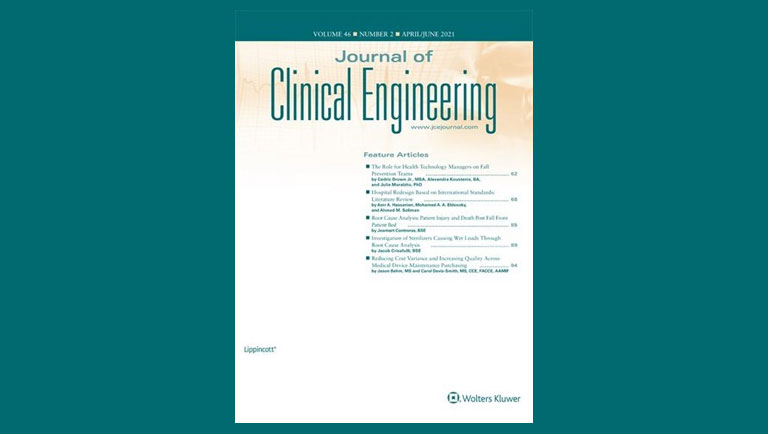
Reducing Cost Variance and Increasing Quality Across Medical Device Maintenance Purchasing
Hospitals often order parts and repairs from multiple vendors selected by their healthcare technology managers, resulting in differences in quality and multiple prices for the same item or service.
Get In Touch
